The tourbillon, a key complication in mechanical watchmaking

Designed to directly influence the regulation of the movement, the tourbillon is one of the most complex mechanisms in mechanical watchmaking.

Flying tourbillon within a Swiss mechanical movement featuring a rotating regulating cage and visible watchmaking components
What is a tourbillon in watchmaking?

The tourbillon is a mechanism built into a watch movement that continuously rotates the balance wheel, balance spring, and escapement within a rotating cage to counteract the effects of gravity on the watch’s accuracy. Considered one of the most prestigious complications in watchmaking, it is a testament to exceptional technical expertise.

The Origins of the Tourbillon

At the end of the 18th century, the accuracy of mechanical watches was directly affected by their position. Kept upright in a pocket for long periods of time, they experienced timing errors caused by gravity and the stress exerted on the regulating organ.

The tourbillon was developed to address this issue. Its principle involves enclosing the balance wheel, its hairspring, and the escapement within a rotating structure capable of continuously adjusting their orientation while the movement is running.

High-precision architecture

The tourbillon is one of the most complex mechanisms in mechanical watchmaking. Its moving cage houses the movement’s main regulating components within an assembly whose lightness, balance and stability directly influence the watch’s performance.

Key figures

  • Several dozen components, each individually assembled and adjusted
  • The tourbillon cage weighs just a few grams
  • A full rotation usually takes one minute
  • Several days of adjustment depending on the movement’s architecture
  • A complication found in only a small proportion of Swiss watch production

This combination of mechanical demands, precision in assembly and mastery of adjustment explains the special place occupied by the tourbillon in contemporary watchmaking.

Norton Peak Flying Tourbillon 44

Following the Chrono 43, Norton Peak has reached a new milestone. Developed around a Swiss tourbillon movement, the Flying Tourbillon 44 embodies a vision of watchmaking in which the pursuit of uncompromising excellence guides every decision.

A signature timepiece for the brand. A new expression of its mechanical excellence.

Beyond the tourbillon

The tourbillon contributes to the movement’s timing stability, but it is only part of the equation. The oscillation frequency, the available energy, the amplitude of the balance wheel and the quality of the regulation also influence the watch’s accuracy.

The flying tourbillon
Capture d’écran 2026-06-08 à 15.49.19

The flying tourbillon draws on the principle of the traditional tourbillon whilst eliminating the upper bridge that usually supports the cage. Supported solely by its base, the structure appears to be suspended within the movement, offering an unobstructed view of the mechanism.

This design imposes stringent mechanical requirements in terms of balancing, rigidity and assembly precision, whilst enhancing the visual appeal of the movement.

A contemporary approach to regulation

In a modern wristwatch, which is constantly in motion, the role of the tourbillon differs from its original historical purpose. Its appeal now lies as much in the mechanical mastery it demands as in its impact on the movement’s regulation.

Architecture, energy management, rotational stability and precision of assembly have become inextricably linked. The tourbillon thus stands out as a construction in which each component directly influences the overall balance of the movement.

Mechanics made visible
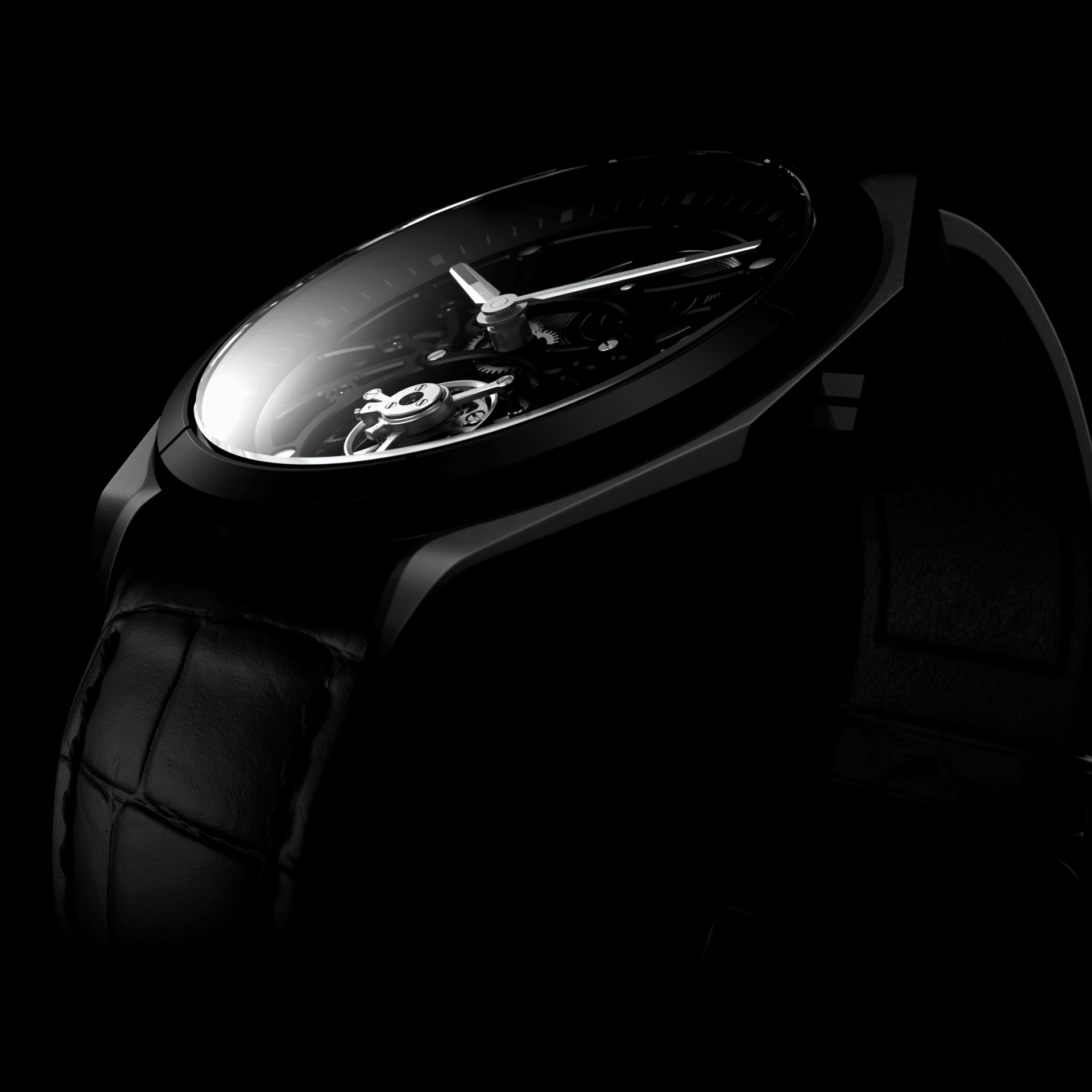
PACKSHOT_03_44_Tourbillon_Black

In contemporary watchmaking, the tourbillon is often associated with open-worked designs that reveal the movement’s regulating mechanisms. Open-worked bridges, skeletonised structures and exposed components all contribute to a more direct understanding of the mechanics.

This exposure of the movement is not merely an aesthetic choice. It highlights the structural constraints, the flow of energy and the functioning of the regulating mechanisms at the heart of the calibre.

FAQ

Who invented the tourbillon?
What is a tourbillon for?
How does a tourbillon work?
What is a flying tourbillon?
Does the tourbillon improve a watch’s accuracy?
Why are tourbillons still used today?
Why does a tourbillon watch cost more than a standard mechanical watch?
Why is the tourbillon considered a major complication?